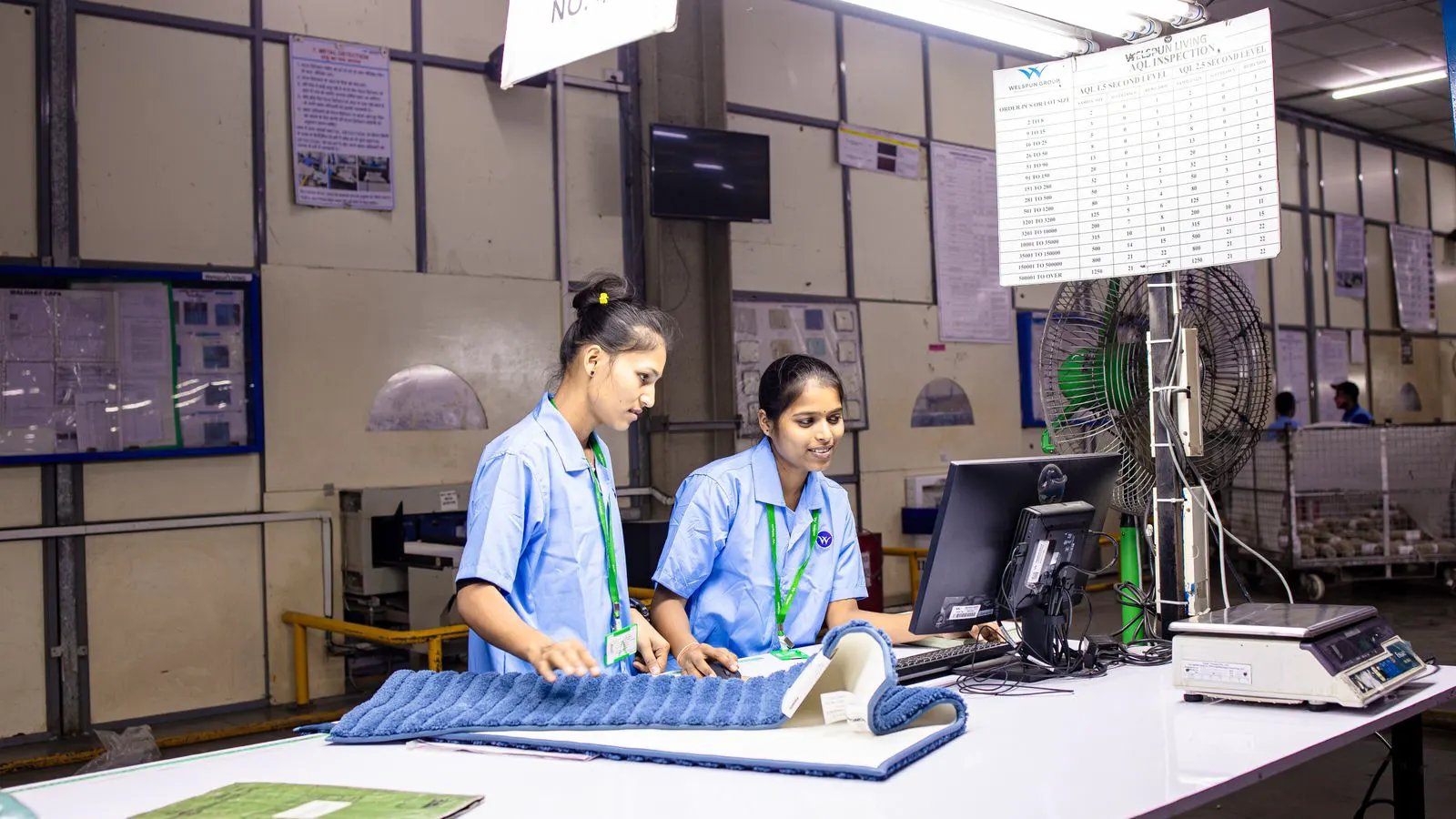
Waffle Weave Towels: Absorbency vs. Weight for 2027
Waffle weave towel absorbency depends on loop structure and weight. This guide explains how construction balances quick drying against initial water uptake. It covers five buyer shifts to prepare for.
- Waffle weave towel absorbency increases with loop size and weight, but drying time also lengthens.
- Buyers should test wet weight and dry time together, not in isolation.
- Weight class changes affect fabric hand, shrinkage, and end-use fit.
- Pre-dye and post-dye treatments change how waffle weave towels handle water.
- Specifying fiber blend and construction helps balance absorbency and drying speed.
The core trade-off in waffle weave
Waffle weave towel absorbency is not a single number. It is a balance between how much water the loops hold at first and how fast that water leaves the fabric. A heavy waffle weave towel soaks up more water quickly. It also dries slower. A lighter waffle weave towel takes less time to dry, but it may not match a heavy terry towel in initial water uptake.
This trade-off matters because towel use is not just about absorbing water. It is about absorbing water, staying dry, and not feeling cold or damp in the hand. A bathroom towel that holds a lot of water but stays wet for hours creates a different user experience than a lighter towel that dries in a short time.
The construction of waffle weave is what creates this balance. The open grid pattern gives the fabric a larger surface area and more air movement than a dense plain weave. That is why waffle weave towels are often chosen for spa, hotel, and residential products where drying speed is valued. But the open structure also means the loops can hold less water if the weight is too low.
Buyers need to think in terms of a pair of results. Initial absorbency is the first wet weight after a standard water test. Drying speed is the time needed to reach a target dry weight under a controlled environment. These two results move together in waffle weave. If you increase weight, initial absorbency usually improves. If you increase weight, drying time usually increases.
How weight changes towel absorbency
Weight is measured as grams per square meter, or GSM. In waffle weave towels, weight is not the only variable. The loop size, thread count, and fiber type also affect absorbency. A 600 GSM waffle weave towel is heavier than a 400 GSM towel, but the 400 GSM towel may have larger loops and a more open structure. That can make the lighter towel absorb water differently.
A low-weight waffle weave towel often has a soft hand and a light feel. It is common in guest towels, hand towels, and bath towels used in spas. The loops are smaller and the fabric is thinner. Water spreads across the surface quickly, but the total amount of water the towel can hold is lower. When the towel is wrung out, less water remains in the fabric.
A mid-weight waffle weave towel gives more absorbency while keeping a reasonable drying time. This is often the preferred range for hotel bath towels and residential bath towels. The loops are larger, and the fabric has more body. It absorbs water well and still dries faster than a heavy terry towel.
A high-weight waffle weave towel is closer to a bathrobe or spa bath towel. It holds a lot of water and feels plush. But it also holds heat and moisture. In a humid bathroom, a heavy waffle weave towel can stay damp longer. That is a real issue for buyers who need towels that dry in open spaces without constant replacement.
The practical rule is that weight and absorbency are linked, but not equal. A heavier towel is not always more absorbent. A lighter towel with larger loops can outperform a heavier towel with smaller loops. The construction pattern matters as much as the GSM.
Drying speed and the open structure
Waffle weave is popular because the open grid lets air pass through the fabric. That is different from a dense terry towel, where the loops are packed together and water can be trapped between them. In waffle weave, the water sits in the loops and on the surface. It can evaporate more easily.
But the open structure also has limits. If the towel is too light, the loops may not hold enough water to be useful. If the towel is too heavy, the loops may hold water too deep. The difference is in how the water moves. In a good waffle weave towel, water is taken up quickly and released quickly. In a poorly constructed towel, water is held in the core of the fabric and released slowly.
Drying speed is affected by fiber. Cotton absorbs water well and holds it well. It dries slower than many synthetics. A cotton waffle weave towel gives good absorbency and a soft hand. A cotton and polyester blend can dry faster, but the absorbency may be lower. A bamboo or Tencel blend can feel soft and absorb water well, but the drying behavior can vary by lot and finishing.
The finishing process also changes drying speed. Softeners can reduce absorbency by coating the fiber. They make the towel feel nicer, but they can slow down water uptake. Detergent residues in the test environment can also affect results. A towel that looks absorbent in a fresh sample may not perform the same after washing.
Buyers should test drying speed under a realistic condition. A controlled test in a warm room is useful, but it does not always match a bathroom. A bathroom may have lower air circulation, higher humidity, and less heat. A towel that dries quickly in a test room may still feel damp in a real bathroom.
What to check before specifying a waffle weave towel
Before choosing a waffle weave towel, check the construction and the fiber. The GSM is a starting point, but it is not the whole picture. Ask for the loop size, the thread count, and the fabric width. These details help you compare samples from different mills.
Check the wet weight after a standard absorbency test. The test should be clear about the water volume, the soaking time, and the wringing method. Different buyers use different methods. If you compare samples from one mill using one method, the results are more useful than comparing samples from different mills using different methods.
Check the dry time under a defined condition. A towel that dries in one hour in a warm room is not the same as a towel that dries in one hour in a cool room. The condition should be written down. The temperature, humidity, and air movement should be part of the test record.
Check the hand feel and shrinkage. A waffle weave towel can feel soft at first and then become stiff after washing. That is a common issue in low-quality cotton towels. Pre-shrunk fabric is easier to work with in finished products. If the towel will be sold as a finished item, the shrinkage should be tested after washing.
Check the color fastness and dye method. Waffle weave towels are often sold in bold colors for spas and hotels. The open structure can show color unevenness if the dye lot is not consistent. A small shift in color between lots can be visible in a large production run. Ask for dye lot documentation and a color standard.
A practical comparison of weight classes
The table below gives a general picture of how different weight classes behave. The numbers are not absolute. They are a guide for comparing samples. The actual results depend on fiber, loop size, and finishing.
| Weight class | Typical use | Absorbency | Drying speed | Hand feel |
|---|---|---|---|---|
| 350 to 450 GSM | Hand towels, guest towels, spa towels | Low to medium | Fast | Light, soft |
| 450 to 600 GSM | Hotel bath towels, residential bath towels | Medium to high | Medium | Soft, with body |
| 600 to 800 GSM | Spa bath towels, heavy bath towels | High | Slow | Plush, warm |
| 800 GSM and above | Large bath towels, bathrobe-like towels | Very high | Slow | Thick, heavy |
This table is not a rule. A 500 GSM towel with large loops can dry faster than a 650 GSM towel with small loops. The loop size and the fiber are as important as the GSM. But the table gives a useful starting point for buyers who are comparing options.
The mid-weight range is often the most flexible. It works for hotels, spas, and homes. It absorbs enough water to be useful and dries fast enough to be practical. The high-weight range is better for products where absorbency is the main goal. The low-weight range is better for products where drying speed is the main goal.
Five shifts buyers should plan for
The first shift is a stronger focus on drying speed. Buyers are looking for towels that do not need to be replaced as often. A towel that dries faster reduces laundry load and improves hygiene. Waffle weave is well suited to this because of its open structure. But the weight must be right. A towel that is too light will not absorb enough. A towel that is too heavy will dry too slowly.
The second shift is a move toward fiber blends that balance absorbency and drying. Cotton is still the main fiber, but blends are being tested more. A small amount of polyester can improve strength and drying. A small amount of bamboo or Tencel can improve softness and absorbency. The key is to test the blend under real use conditions. A blend that works in a sample may not work in a large production run.
The third shift is a closer look at finishing. Softeners and finishes are being scrutinized more. A soft finish can make a towel feel better, but it can reduce absorbency. Buyers are asking for clearer information on the type of finish and its effect on water uptake. Some mills offer towels with minimal finishing, which preserves absorbency but may feel stiffer at first.
The fourth shift is a demand for consistent dye lots. Waffle weave shows color variation more easily than dense fabrics. The open structure can make small color shifts visible. Buyers are asking for tighter dye controls and better documentation. This is especially true for hotel and spa programs where the towel must look the same in every lot.
The fifth shift is a focus on durability and wash performance. A towel that absorbs water well but falls apart after a few washes is not a good product. Buyers are testing towels after multiple wash cycles. They are checking loop strength, color fastness, and shrinkage. A waffle weave towel that holds its shape and color after washing is more valuable than a towel that feels perfect in the sample.
How to prepare for these shifts
Start with a small set of samples. Do not test every possible weight and fiber. Pick two or three weight classes and two or three fiber types. Test them under the same conditions. This gives you a clear picture of how the variables interact.
Write down the test method. The water volume, soaking time, wringing method, and drying condition should be recorded. This makes the results comparable. It also gives the mill a clear standard to meet.
Ask for the construction details. The GSM is not enough. You need the loop size, thread count, and fabric width. These details help you understand why one towel behaves differently from another.
Test after washing. A fresh sample can look and feel better than a used sample. Wash the sample a few times and then test absorbency and drying speed again. This shows how the towel performs in real use.
Keep a record of the results. Even if the results are qualitative, a written record helps you compare samples over time. It also gives you a reference when you need to re-order or switch mills.
The bottom line is that waffle weave towel absorbency and weight are connected, but not simple. The construction, fiber, and finishing all matter. A towel that absorbs water well and dries fast is a balance of several factors. Buyers who test under clear conditions and ask for construction details will make better decisions. The shifts in the market are moving toward faster drying, clearer information, and better durability. Preparing for those shifts means testing the whole towel, not just the GSM.
Frequently asked questions
What GSM range is best for a waffle weave bath towel?
A mid-weight range, often 450 to 600 GSM, is a common starting point for hotel and residential bath towels. It balances absorbency and drying speed.
Does a heavier waffle weave towel always absorb more water?
Not always. Weight matters, but loop size and fiber type also affect absorbency. A lighter towel with larger loops can absorb more than a heavier towel with small loops.
How does waffle weave compare to terry in drying speed?
Waffle weave usually dries faster than terry because of its open grid structure. Terry towels hold water deeper in the loops and can dry more slowly.
What finishing options should buyers watch for?
Softeners and finishes can reduce absorbency. Buyers should ask about the type of finish and test towels after washing to see how the finish affects performance.
How should drying speed be tested?
Test drying speed under a defined condition with a set temperature, humidity, and air movement. The method should be written down so results are comparable.