7-Step Checklist for Verifying Textile Supplier Audit Compliance
Verify textile suppliers through a structured process covering documentation, factory inspection, material testing, and social compliance. This guide provides a seven-step checklist to confirm audit standards and identify red flags before orders are placed.
- Document control requires matching mill certifications to specific production lots, not just company-level certificates.
- Factory audits must cover fire safety, chemical handling, and wage records, not just general cleanliness.
- Material testing should verify composition, shrinkage, and colorfastness for the specific dye lot and fabric grade.
- Social compliance checks need direct evidence of worker interviews and payroll records.
- Contractual terms must define audit rights, corrective action timelines, and penalty clauses for non-compliance.
Why audit compliance fails in textile supply chains
Supplier verification breaks down when buyers rely on a single certificate or a one-time factory visit. A mill may hold valid certifications but still ship fabric with inconsistent dye lots, missing test reports, or unsafe working conditions. These gaps surface only after the fabric reaches your warehouse or your end customer.
The process must be active and tied to the specific order. You need to confirm that the supplier meets audit standards for the exact product being manufactured. This requires checking documents, observing the factory, and verifying material performance.
A structured checklist removes guesswork. It forces the evaluation to cover technical quality, social standards, and administrative compliance. The steps below follow a logical sequence from initial document review to final contract terms.
Step 1: Verify master documents and audit history
Start with the supplier’s core compliance documents. Request a current copy of their quality management system certificate, environmental certifications, and social compliance audit reports. Check the issuing bodies. Look for third-party audits from recognized organizations rather than self-declared compliance.
Confirm the scope. A certificate for “environmental management” may not cover the specific chemical treatments your fabric requires. A social audit may cover one factory but not the dyeing unit or the finishing plant.
Red flags to watch for:
- Certificates that are close to expiration
- Scope that excludes specific production stages
- Reports that are more than 18 months old
- Refusal to share audit reports due to “confidentiality”
Checklist item:
- Collect current quality, environmental, and social certificates.
- Verify the scope matches your product requirements.
- Confirm issuing bodies are recognized third parties.
- Check expiration dates and renewal history.
Step 2: Conduct a physical factory inspection
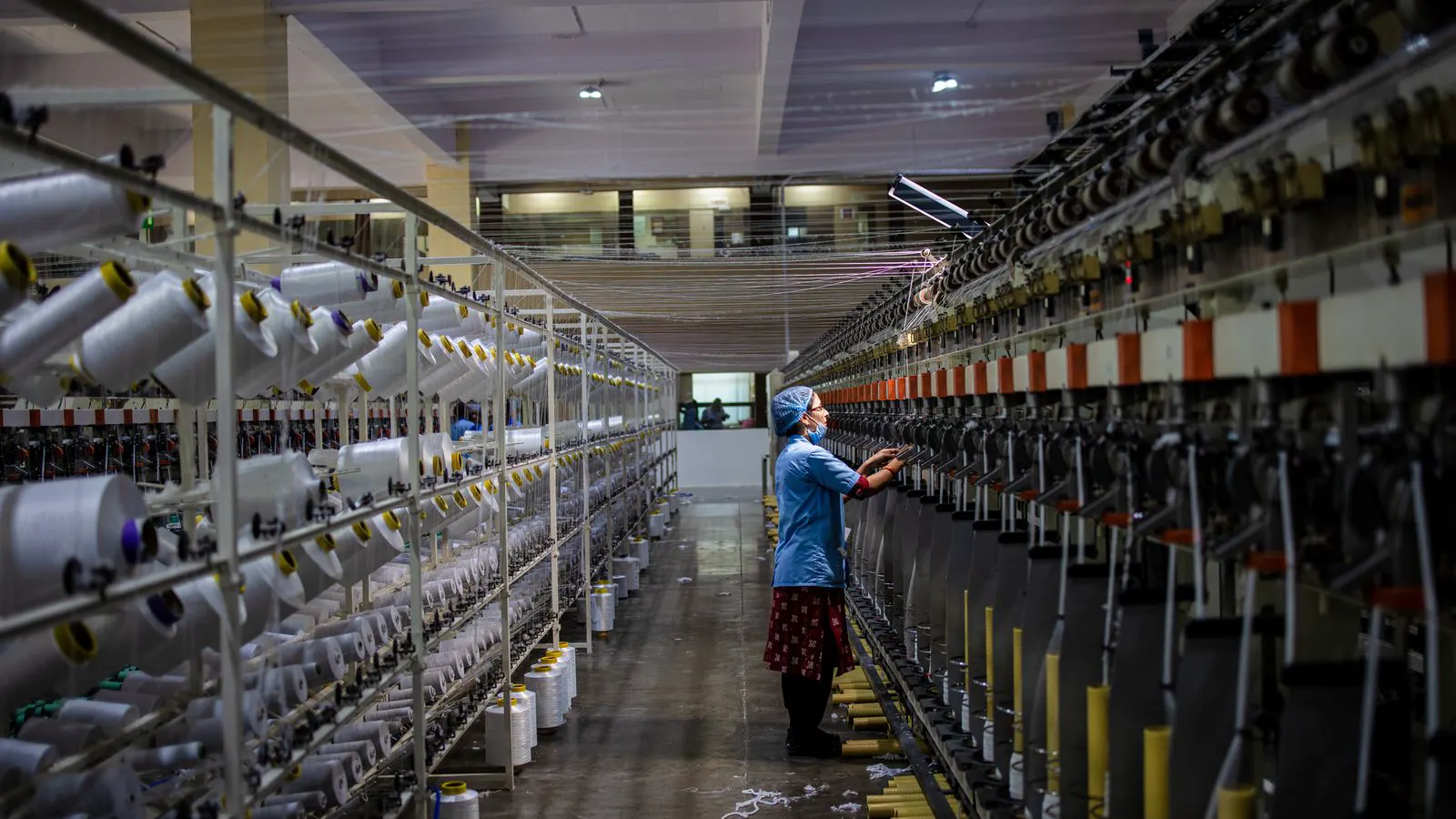
Documents only tell part of the story. You must visit the production facility. Bring a trained inspector or a local agent if you cannot travel. The inspection covers the entire value chain, including spinning, weaving or knitting, dyeing, printing, and finishing.
Observe the workflow. Fabric should move in a logical sequence without backtracking. Check the labeling system. Each piece should carry lot numbers that trace back to the raw materials. If labels are handwritten, missing, or inconsistent, the traceability is weak.
Look at the chemical storage. Dyes, auxiliaries, and finishing agents should be stored in labeled containers with safety data sheets available. Vents and drainage should be in working order. The floor should be clean enough to detect spills or leaks immediately.
Checklist item:
- Inspect raw material storage and labeling.
- Trace fabric through each production stage.
- Check chemical storage and safety data sheets.
- Observe waste water treatment or chemical handling areas.
- Verify lot numbering is consistent across the factory.
Step 3: Confirm material testing and specifications
The fabric must pass laboratory testing that matches your technical specification. Do not rely on the supplier’s internal lab alone. Use an independent third-party lab. The tests should cover composition, weight, shrinkage, colorfastness, pilling, and any performance requirements such as flame retardancy or moisture wicking.
Specify the test methods. For example, state which standard applies to colorfastness to washing, rubbing, or light. Specify the dye lot. If you are ordering multiple colors, test each dye lot separately. A dye lot that looks correct in the sample may differ in the production run.
Check the lab report for the actual test dates. The report should be dated after the fabric production, not before. If the report is dated before the fabric is made, it is a template, not a real test.
Checklist item:
- Define test parameters in the purchase order.
- Require independent third-party testing.
- Verify test dates match production dates.
- Confirm dye lot numbers on reports.
- Check for deviations or “near-miss” results.
Step 4: Evaluate social compliance and worker welfare
Social compliance audits check working conditions, wages, hours, and safety. These audits are critical for brands that sell in regulated markets. The audit should cover all workers, including temporary and subcontracted labor.
Do not just look at the posted wage schedule. Ask for payroll records for the last three months. Compare the figures. Check the shift roster. If workers are scheduled for more than the legally permitted hours, that is a compliance failure.
Observe the break areas and canteens. Are they clean? Do workers have access to drinking water? Check the emergency exit routes. They should be unobstructed and clearly marked. Fire extinguishers should be tagged with inspection dates.
Checklist item:
- Review payroll records from the last quarter.
- Check shift rosters against legal hour limits.
- Verify emergency exits are clear and marked.
- Observe worker interviews during the audit.
- Check for child labor or forced labor indicators.
Step 5: Assess environmental and chemical management
Environmental compliance covers water usage, wastewater treatment, and chemical disposal. In textiles, this is a high-risk area. Many dyes and auxiliaries contain restricted substances. You need to confirm the supplier follows your chemical policy.
Request the Material Safety Data Sheets for all chemicals used in production. Check if they are current. Verify that the wastewater treatment plant is operational. If the supplier outsources finishing to a third-party plant, you must audit that plant as well.
Look at the energy consumption. Is the factory using renewable energy or energy-efficient equipment? This may not be a compliance failure, but it affects your brand’s environmental reporting. Check if the supplier has a water recycling system in place.
Checklist item:
- Review safety data sheets for all production chemicals.
- Inspect the wastewater treatment facility.
- Verify chemical storage is segregated and labeled.
- Check energy and water monitoring records.
- Confirm restricted substance compliance.
Step 6: Review logistics and packaging compliance
Compliance extends to how the product moves. Check the packaging materials. If you are selling in Europe, the packaging must meet waste and recycling regulations. The labels on the packages must match the product documentation.
Verify the shipping documentation. The commercial invoice, bill of lading, and certificate of origin must be consistent. Mismatches can cause customs delays or rejections. The packing list should show the exact quantity and lot numbers.
Check the storage conditions at the supplier’s warehouse. Fabric should be stored in a dry area. If it is stored in a damp warehouse, the risk of mold and odor issues increases.
Checklist item:
- Check packaging material compliance.
- Verify label accuracy on all packages.
- Review shipping documents for consistency.
- Inspect warehouse storage conditions.
- Confirm temperature and humidity control.
Step 7: Define contract terms and audit rights
The final step is to lock in the verification process through the contract. The contract must give you the right to audit the factory without notice. It should specify the frequency of audits. It should define what happens when a non-conformity is found.
Include corrective action requirements. If an audit finds a fire safety issue, the contract should state that the supplier must fix it within a defined period. If they do not, you should have the right to withhold payment or terminate the order.
Specify the penalties for non-compliance. This could be a financial penalty, a reduction in order quantity, or the right to reject the shipment. The terms should be clear and enforceable.
Checklist item:
- Include audit rights in the contract.
- Define corrective action timelines.
- Specify penalties for non-compliance.
- Clarify rejection and return procedures.
- Confirm insurance coverage for compliance failures.
Quick reference: Audit compliance by stage
The table below summarizes the key checks for each stage of the supply chain. Use this as a quick reference when preparing your verification plan.
| Stage | Key Documents | Physical Check | Red Flag |
|---|---|---|---|
| Raw Material | Mill certificates, dye lot sheets | Fiber identification, storage condition | Missing dye lot numbers |
| Manufacturing | Production schedule, lot log | Machine maintenance, operator training | Inconsistent lot labeling |
| Finishing | Chemical SDS, test reports | Chemical storage, wastewater treatment | Expired safety data sheets |
| Packaging | Compliance labels, shipping docs | Warehouse humidity, packaging integrity | Mismatched invoice and packing list |
| Logistics | Bill of lading, certificate of origin | Transport conditions, seal integrity | Unsealed containers |
Common mistakes in supplier verification
Buyers often make these mistakes during the verification process.
First, they accept a single audit report as permanent proof. Factories change management, staff, and processes. A report from two years ago may not reflect current conditions. You need periodic re-audits.
Second, they skip the subcontractor audit. Many mills outsource dyeing or finishing to other plants. If you do not audit that plant, you are not verifying the full supply chain. A compliant spinning mill can send fabric to a non-compliant dyeing house.
Third, they ignore the human element. A factory can have perfect machinery and still have exploitative labor practices. The audit must include worker interviews. Do not rely only on management interviews.
Fourth, they do not tie the audit to the specific order. A general factory audit is useful, but it does not guarantee that this specific batch of fabric was made under those conditions. The lot traceability must be verified for each order.
Building a long-term supplier relationship
Verification is not a one-time event. It is an ongoing relationship. Build a scorecard for each supplier. Track audit results, test pass rates, delivery performance, and corrective action speed.
Review the scorecard quarterly. If a supplier’s score drops, schedule a deeper audit. If a supplier consistently passes, you can reduce the frequency of audits. This balances risk management with efficiency.
The goal is not to punish suppliers. The goal is to create a supply chain that meets your quality, social, and environmental standards. When you verify thoroughly, you reduce the risk of recalls, fines, and brand damage. You also build a foundation of trust that makes long-term collaboration possible.
Frequently asked questions
How often should you audit a textile supplier?
Conduct a full audit at least once per year. Add spot checks or targeted audits if the supplier has had recent non-conformities or if you change the product specification significantly.
Can a supplier use a third-party audit report instead of a factory visit?
A third-party report is useful, but it should not replace a physical inspection for a new supplier or after major changes. You need to verify that the conditions in the report match the actual factory.
What is the difference between a quality audit and a social audit?
A quality audit focuses on product specifications, testing, and production processes. A social audit focuses on labor practices, working hours, wages, and worker welfare. Both are required for full compliance.
How do I verify that the fabric matches the sample?
Require a production sample before the full order. Test the production sample against your specification. Confirm the dye lot numbers on the production fabric match the sample. Only approve the order if the production sample passes.
What should I do if a supplier fails an audit?
Require a corrective action plan with specific deadlines. Re-audit after the corrective actions are implemented. If the supplier fails again, consider suspending orders and looking for alternative suppliers.